Festivals and Thai Culture
Vesak Day in Australia
What Vesak, or Visakha Puja, commemorates, how temples across Australia mark it, and what a first-time visitor will see.
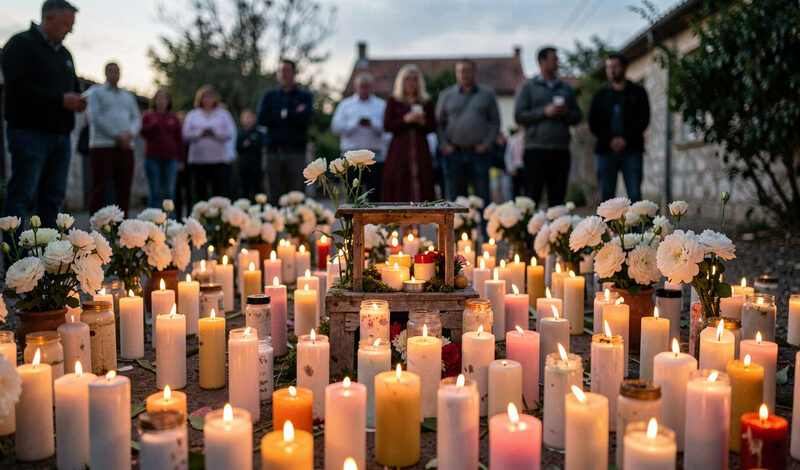
Vesak is the holiest day of the Buddhist year: a single full-moon observance that marks the Buddha's birth, his enlightenment and his final passing, all three traditionally assigned to the same day of the lunar calendar. In Australia it is kept at temples of every tradition, and at Theravada temples it is the most solemn date on the calendar. For a visitor, it is also the most quietly spectacular: candles after dark, chanting in Pali, and a community moving at half its normal speed.
What the day marks
The Pali name is Visakha Puja, after the lunar month of Visakha, which falls in May. The tradition holds that the Buddha was born, awakened and passed into final nibbana on the full moon of that month, in different years of his life. The triple commemoration gives the day its weight: it is at once a birthday, a celebration of the teaching's existence, and a memento of impermanence.
The ceremonies reflect all three. Homage to the birth often takes the form of pouring water over a small Buddha image, echoing the legend of the infant Buddha being bathed. The enlightenment is honoured by chanting and meditation through the evening. The passing is marked by the tone of the whole observance, which is closer to a vigil than a party.
What happens at an Australian temple
Programs differ, but the shape of a Theravada Vesak is consistent. Lay people gather in the morning to take the precepts, five for the day or eight for the more observant, as described in the precepts guide. Food is offered to the monks before noon, in the dana exchange covered in the dana guide. Afternoon brings talks in Thai or English, meditation periods and the preparation of candles and flowers.
The day ends with the part most visitors remember: the circumambulation. After dark the congregation walks three times around the shrine or the main Buddha image, each person carrying a candle, flowers and incense. The three circuits honour the Buddha, the dhamma and the sangha. The effect, a slow river of small flames around a lit shrine, is the closest the tradition comes to spectacle, and it remains a vigil rather than a show.
How the date is set
Vesak follows the lunar calendar, which is why its Gregorian date moves each year within May. Different traditions fix it differently: most Theravada communities observe the full moon of Visakha itself, while some East Asian traditions celebrate the Buddha's birth on a separate date earlier in the season. In Australia the practical effect is a cluster of observances across May rather than a single weekend, and temple programs publish their own day. A visitor checking a temple's calendar in April will usually find the Vesak date already announced.
Vesak beyond the Theravada
Because Australia holds every Buddhist tradition at once, Vesak here is also a shared civic event. Buddhist councils in most states host joint celebrations where Theravada, Mahayana and Vajrayana groups take part together, and the Buddhist Council of Queensland coordinates the state's observance. The date is even recognised internationally: the United Nations has marked Vesak since 1999.
For visitors, the shared ceremonies are the gentlest possible entry: the crowd is large, the program is printed, and nobody is expected to know anything in advance.
Why the day is kept at all
It is worth saying plainly why the tradition holds this particular day so high. Vesak is not a harvest festival or a new year; it commemorates events the tradition treats as historical, and the ceremonies are acts of recollection before they are acts of celebration. The candles, the precepts and the procession are all ways of keeping the same thought in front of the mind: that the teaching the community lives by had a beginning in a human life, and that the life ended. The day's mood, half festival and half vigil, is the mood of that thought.
Visiting on the day
The etiquette is the normal temple etiquette carried by a bigger crowd: shoes off inside, shoulders and knees covered, no pointing feet at images, no touching monks for women. The full list is in the visiting guide. Two Vesak-specific notes: the evening circumambulation is open to anyone who cares to join, and silence during the chanting is appreciated more than any correct behaviour performed loudly.
Those planning around the calendar will find the other major days in the Songkran guide and the Kathina guide, and the temples that host them in the Queensland temples map. The tradition the day belongs to is set out in the Theravada overview.