Temples and Visiting
Thai Temples in Queensland
A short map of Thai and Theravada temples in Queensland, from Forestdale to regional communities, and how each fits local life.
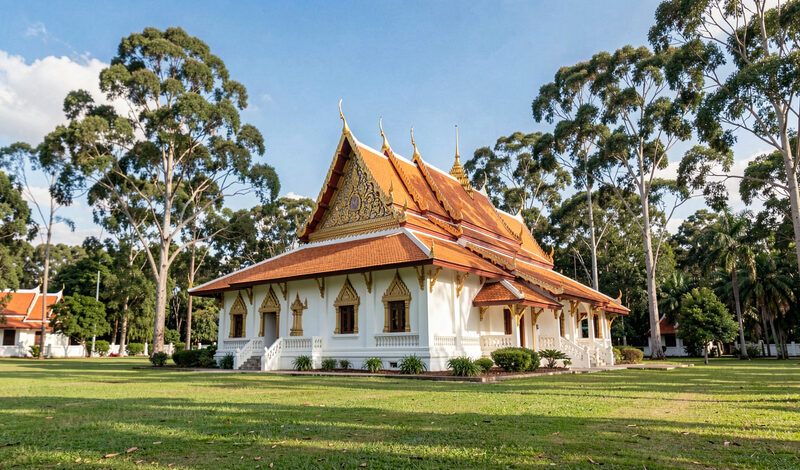
Theravada Buddhism in Queensland is younger than the state's oldest churches and older than most of its suburbs. From a first vihara in a rented Brisbane house in 1982, the tradition has grown to a dozen temples across South East Queensland and communities reaching as far as Rockhampton, Townsville and Cairns. This guide traces how that happened and maps the communities a visitor will meet today.
How it began
The founding instrument was the Queensland Sangha Trust, established in 1981 with representatives from the state's different Theravada communities. The following year the first temple was founded in Brisbane: the Brisbane Buddhist Vihara at Highgate Hill, which served all traditions before the communities grew large enough to need their own houses. The pattern that followed was set by language and culture rather than doctrine: the Trust supported the establishment of separate temples for the Sinhalese, Burmese, Lao, Cambodian and Thai communities, often with advice and pioneering monks sent by established temples in Sydney and Melbourne.
The sequence, documented by the Queensland Atlas of Religion, is worth noting because it explains the geography still visible today. The first Southeast Asian temple was the Lao temple at Bellbird Park, Ipswich, in 1990. A Cambodian temple at Waterford in Logan City followed the same year. The first Thai temple, Wat Thai Buddharam, was established at Ellen Grove in 1991; when the Logan Motorway was planned through its grounds, the community moved to its present site at Forestdale, where it remains one of the state's best-known wats. A Sri Lankan temple begun at Forest Lake in 1992 moved to Ellen Grove in 1995, where the Sri Lanka Buddhist Monastery still stands, and a Burmese temple was founded at Ellen Grove in 2007.
Where the temples are now
The Atlas counted twelve Theravada temples across Brisbane, Logan, the Gold Coast and the Sunshine Coast in 2023, with the heaviest concentration in the Logan corridor south of Brisbane: Forestdale, Ellen Grove, Waterford and the suburbs between. The reasons are practical: land was affordable, the communities were already settling there, and one temple made the next easier to build. The Queensland Atlas of Religion's survey remains the best single source on the full list.
The communities break down by origin. Thai temples, led by the Forestdale wat, serve the largest Southeast Asian Buddhist community in the state. Sri Lankan temples, including the Buddhist Vihara of Queensland at Goodna and the Sri Lanka Buddhist Monastery at Ellen Grove, serve a community that is often more anglophone and often more focused on meditation teaching for a general public. Lao, Cambodian and Burmese temples are smaller and more community-bound, and forest hermitages in the ranges, such as Dhammagiri near the Glass House Mountains, keep the stricter monastic end of the tradition.
Beyond the south east
Regional Queensland holds Theravada communities too, thinner on the ground but established. Temples and meditation groups operate in and around Rockhampton, Townsville and Cairns, serving the smaller diaspora communities of the north and centre. The distance between them changes the pattern: where a Brisbane family can choose among a dozen temples, a regional community often runs one hall that carries every function at once. The same exchange between monks and lay people holds in both places, which is why the dana guide reads the same in Cairns as in Logan.
What distinguishes a wat from a vihara or a hermitage
The names carry information. A wat is a Thai or Lao community temple: a public institution with lay committees, festivals and a full social calendar. A vihara in the Sri Lankan style is similar but usually presents itself to the English-speaking public more directly. A forest hermitage or monastery is something else: smaller, monastic-led, and organised around the practice described in the meditation guide rather than the community calendar.
All of them share the same structural exchange, explained in the dana guide: lay communities support resident monks, and monks anchor the religious life of the community. The calendar that animates them is mapped in the festivals section.
Visiting any of them
The etiquette that applies everywhere is set out in the visiting guide: shoes off, modest dress, feet never pointed at images or monks, and care around the customs that vary by community. Temple websites and community pages list service times, and festival open days remain the easiest first visit. For the tradition all these places share, the Theravada overview is the foundation, and for those considering a deeper commitment, the retreat guide and the ordination guide describe what each level involves.