Meditation and Practice
Preparing for a First Retreat
What a Theravada retreat day looks like in Australia: silence, sittings, interviews, food rules, packing and realistic expectations.
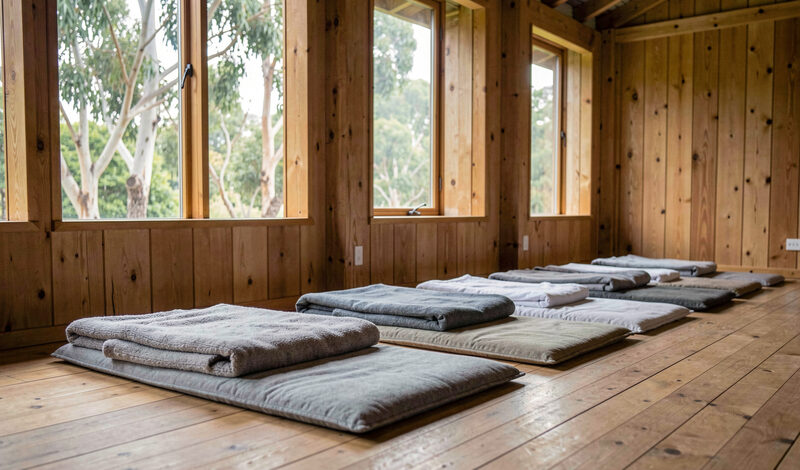
A first meditation retreat is usually the moment a home practice becomes something else: the same breath, the same wandering mind, but held inside a silence that lasts for days. In Australia, Theravada retreats run from a weekend to ten days or more, in purpose-built centres, in forest monasteries and in rented halls. They are more ordinary and more demanding than most newcomers expect. This guide describes what a retreat day actually looks like and how to arrive prepared rather than surprised.
What a retreat is for
The logic is simple. Daily life offers the mind a new object every few seconds; a retreat removes most of them. Without phones, conversation, reading or entertainment, attention has nowhere to go but back to the meditation object, and the habits that normally stay invisible become obvious. That exposure is the point, and also the difficulty: a retreat is less a holiday than a mirror held up for days at a time.
Nothing on a standard retreat requires Buddhist commitment. Retreatants are asked to keep the form of the place while they are there, not to believe anything in particular.
The shape of a retreat day
Most Theravada retreats follow a timetable that has changed little in decades. The day starts early, often before five, with a first sitting before dawn. Sittings of forty-five to sixty minutes alternate with periods of walking meditation through the day. There is a morning meal and usually a light midday meal; in strict centres nothing solid is eaten after noon, in keeping with the monastic rule. A dhamma talk in the evening closes the formal day, though many retreatants sit again before bed.
Noble silence is the rule throughout: no talking except at designated interviews, and often no eye contact, gestures or notes. For most first-timers the silence is the unexpected relief of the retreat; for some it is the hardest part.
The precepts on retreat
Centres ask retreatants to keep either the five precepts or, on stricter courses, eight. The five are the same ones lay Buddhists undertake in daily life, covered in the precepts guide: no killing, stealing, sexual misconduct, false speech or intoxicants. The eight add no food after noon, no entertainment or adornment, and no luxurious beds. They are training rules, not tests of belief, and they exist to make the container of the retreat hold.
Interviews and teachers
Most retreats include short scheduled interviews with the teacher, often every day or two, in which each retreatant briefly reports what has been happening in the sittings. This is where difficulties get normalised: back pain, sleepiness, boredom, sudden grief, and the conviction that everyone else in the hall is meditating better. Teachers have heard all of it, usually thousands of times.
Choosing a first retreat is largely about format. A weekend is a gentle introduction; the classic ten-day course in the Goenka tradition, which runs several centres in Australia, is a full immersion taught by recorded instruction; monastery-based retreats in the Thai forest tradition are less programmed and often expect a foundation of daily sitting first. The code of discipline published by the Vipassana organisation gives a fair idea of the rules common to stricter courses.
What to pack and what to expect
Practicalities are plain: loose modest clothing in layers, a shawl or blanket, thongs or slip-on shoes for moving between buildings, any own cushion if the centre allows it, and no books, journals or devices unless the centre says otherwise. Alarm duties are usually handled by the timetable bell.
Expect the first two days to be mostly body: sore knees, stiff back, the discovery that forty-five minutes is long. Expect the middle of the retreat to be mostly mind: sleepiness, planning, replayed conversations. And expect, if the retreat is long enough, some stretch of unusual quiet that makes the whole exercise sensible. None of this is guaranteed and none of it is the goal; the goal is simply to keep watching.
Cost and booking
Most Theravada retreats in Australia run on dana: accommodation and food are provided without a set price, and participants give what they can at the end, in the pattern described in the dana guide. Booking early matters because the better-known centres fill months ahead. A first retreat should also be honest about health: a centre will ask about conditions that days of silence can amplify, and the honest answer protects the retreatant rather than excluding them.
Coming home
The days after a retreat can be oddly tender: noise sounds louder, traffic feels aggressive, and ordinary conversation takes effort. Teachers advise re-entering slowly and keeping even a short daily sit, which is easier to continue than to restart. The breath meditation guide gives the method that most retreats assume, and the temples guide lists communities where day-long sits offer a halfway step between home practice and a full course.